
MyHive updates
Lorem ipsum dolor sit amet
Accenture: 26.08.2026
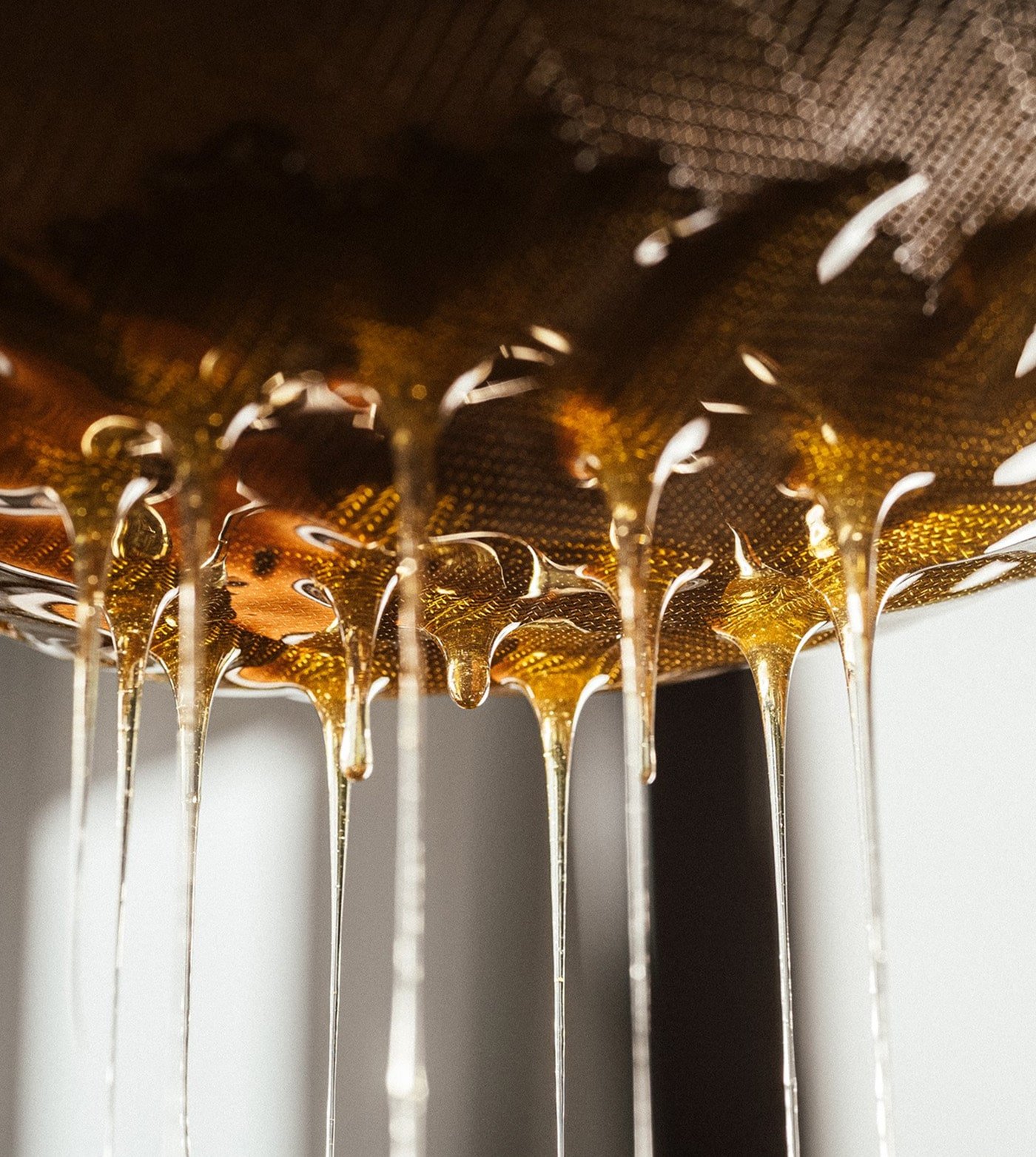
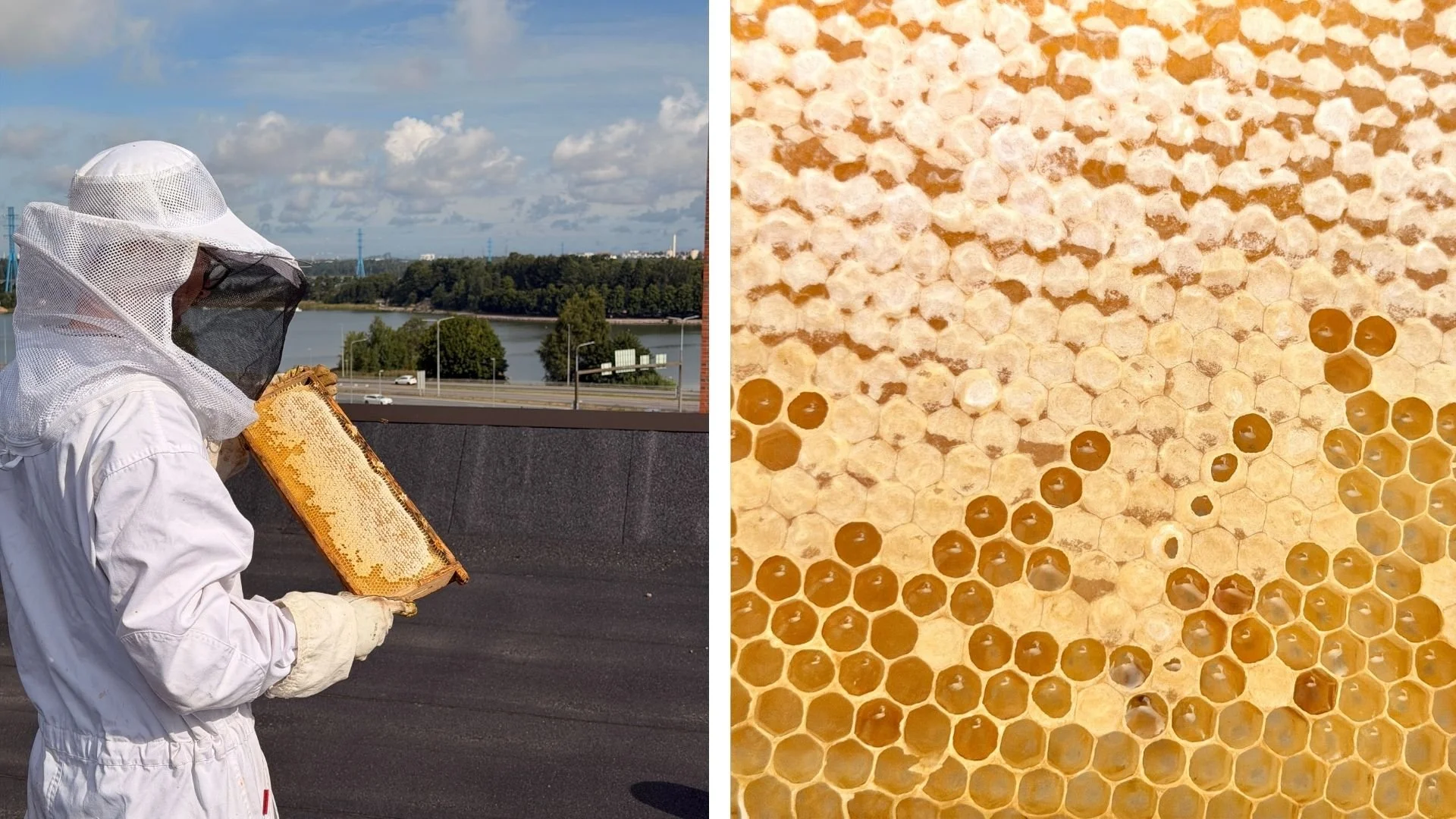
It’s time to harvest! The honeycombs are collected from the hive and taken to the processing facility, where the honey is extracted from the combs using centrifugal force. Did you know that honey produced in different parts of the city tastes and looks different? This is thanks to the city’s diverse range of plant species.
Accenture: 04.08.2026
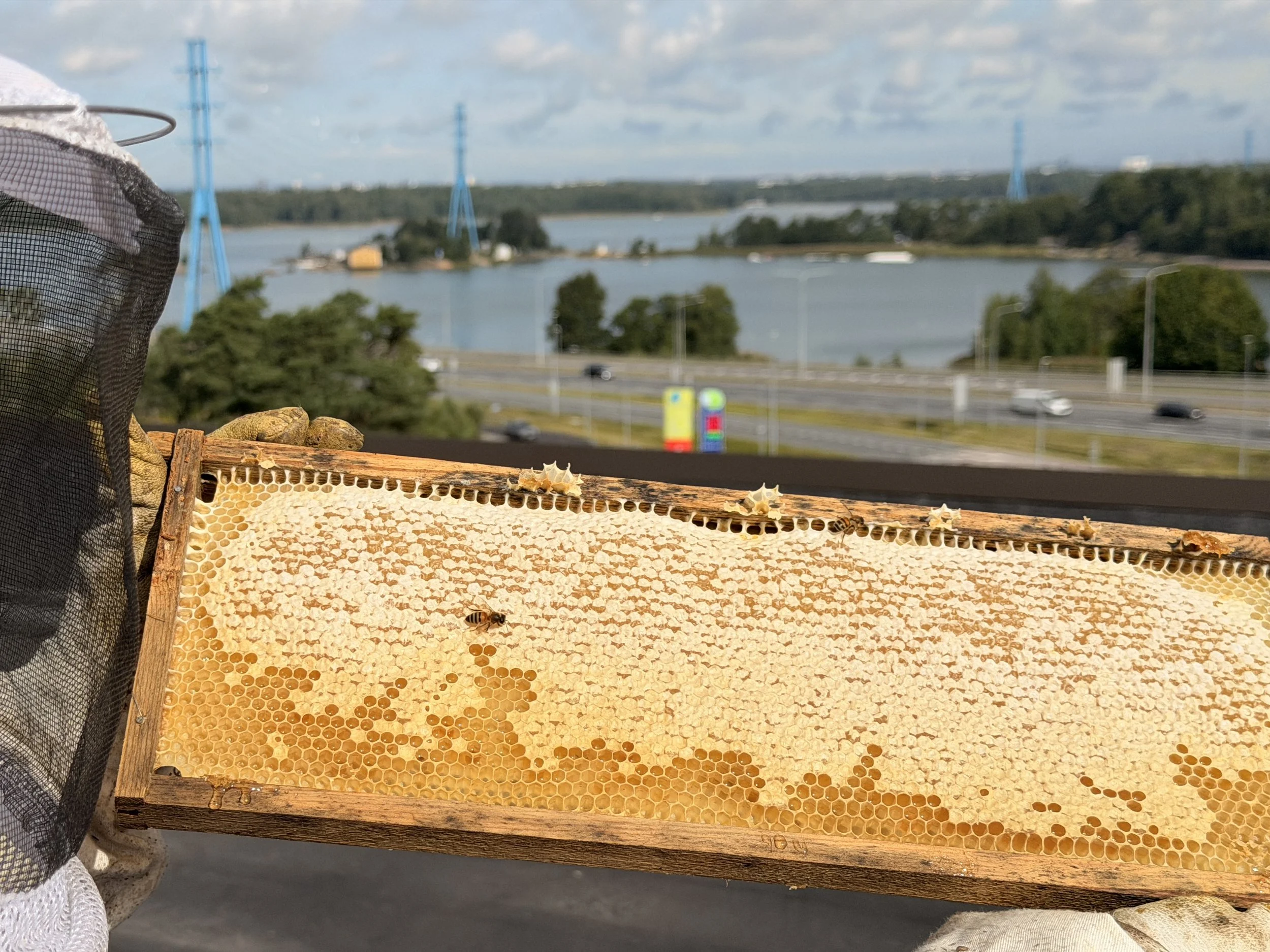
As the summer progresses, the teamwork inside the hive is paying off as the first honey stores reach maturity. Once the colony has worked together to fan away the excess moisture from the nectar, it’s time to protect the sweet results of their work. The bees produce fresh wax to seal the filled cells with an airtight wax cap and the result is a perfectly finished golden honeycomb. This natural preservation method keeps the honey safe from moisture and preserved for the future generation or winter bees.
Accenture: 08.07.2026
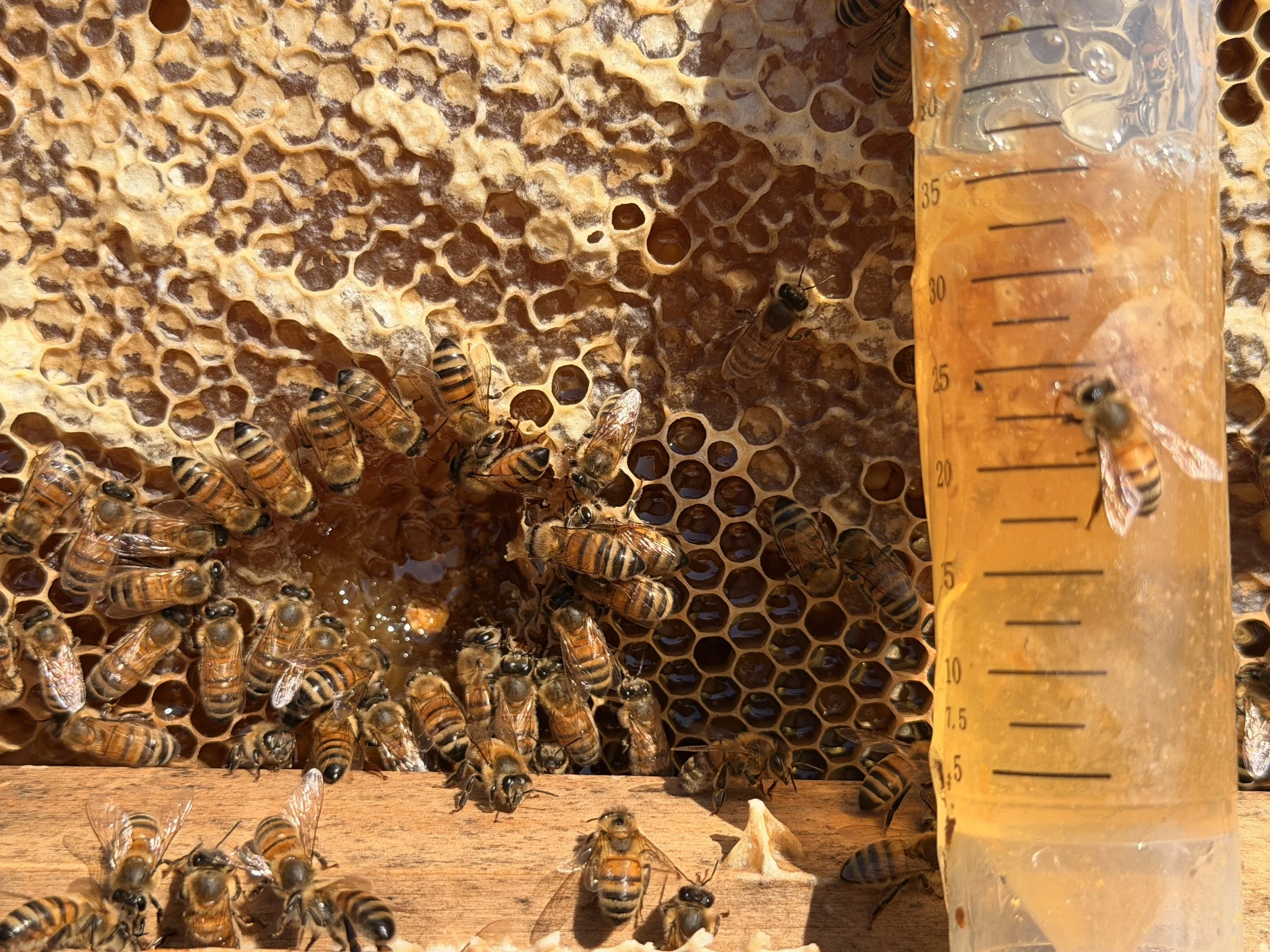
During today's visit, we collected the first honey samples of the season from a freshly filled honeycomb. Since bees constantly explore the surrounding area within a radius of several kilometers, they act as handy research assistants in monitoring the state of the environment. We collect honey samples from beehives throughout the summer and later our partner laboratory Apilab analyzes the samples for the DNA of flowering plants found in the surrounding area. This bee-assisted research method provides unique information about the biodiversity of the surrounding nature, the ecosystem health, and the food sources available to pollinators.
Accenture: 30.06.2026
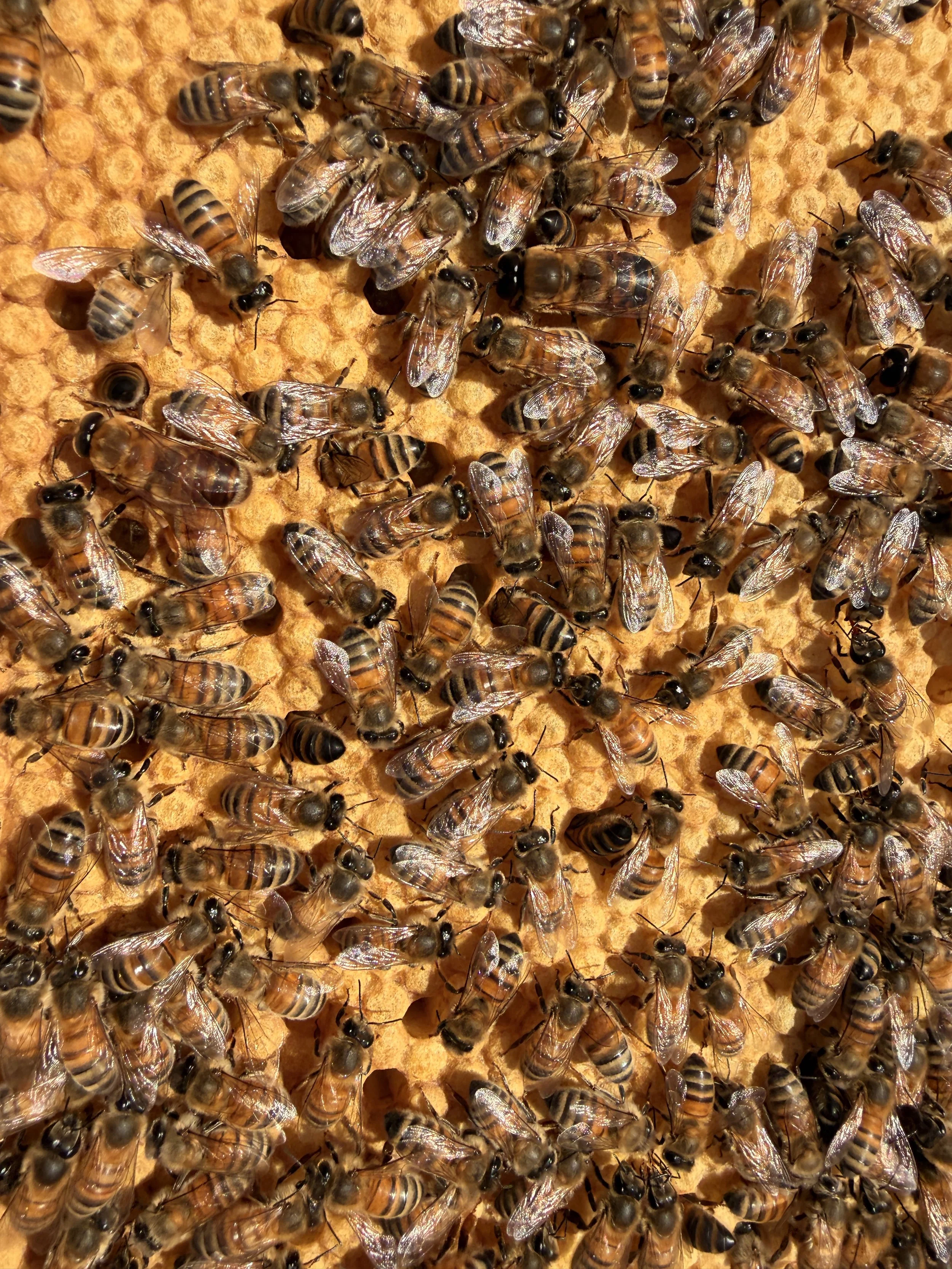
When flowers are in full bloom, food is abundant in nature and the forager bees work in two shifts to collect all the nectar in storage for the winter. The foragers returning to the hive are met by a group of storage workers at the entrance to the hive, who receive the nectar cargo for further processing. The storage bees convert the nectar into honey by evaporating the excess water from it before storing it. Bees have many varying roles in the hive, the first of which is to clean their own cell immediately after hatching and prepare it for the next larva or for the storage of honey and pollen. In a honeybee colony, female workers do all the labor and work their way up the career ladder as they mature. Young bees work as cleaners and nannies feeding the small bees and later building wax combs.
As they grow older, they move on to storage work, guarding the hive entrance and finally flying in and out of the hive foraging for food, which is the hardest and most dangerous job for a worker. In their lifetime, one bee collects 1/12 teaspoon of honey, which the next generation of winter bees then eat to keep the hive warm until the following spring.
Accenture: 18.06.2026
When flowers are in full bloom, food is abundant in nature and the forager bees work in two shifts to collect all the nectar in storage for the winter. The foragers returning to the hive are met by a group of storage workers at the entrance to the hive, who receive the nectar cargo for further processing. The storage bees convert the nectar into honey by evaporating the excess water from it before storing it. Bees have many varying roles in the hive, the first of which is to clean their own cell immediately after hatching and prepare it for the next larva or for the storage of honey and pollen. In a honeybee colony, female workers do all the labor and work their way up the career ladder as they mature. Young bees work as cleaners and nannies feeding the small bees and later building wax combs.
As they grow older, they move on to storage work, guarding the hive entrance and finally flying in and out of the hive foraging for food, which is the hardest and most dangerous job for a worker. In their lifetime, one bee collects 1/12 teaspoon of honey, which the next generation of winter bees then eat to keep the hive warm until the following spring.
Accenture: 28.05.2026
There are over 235 wild bee species in Finland, including various species of bumblebees. Most of these are solitary bees. Pollinators, which also include bumblebees, butterflies, and certain bird species, pollinate 80% of all the world’s plants and 75% of human food crops *
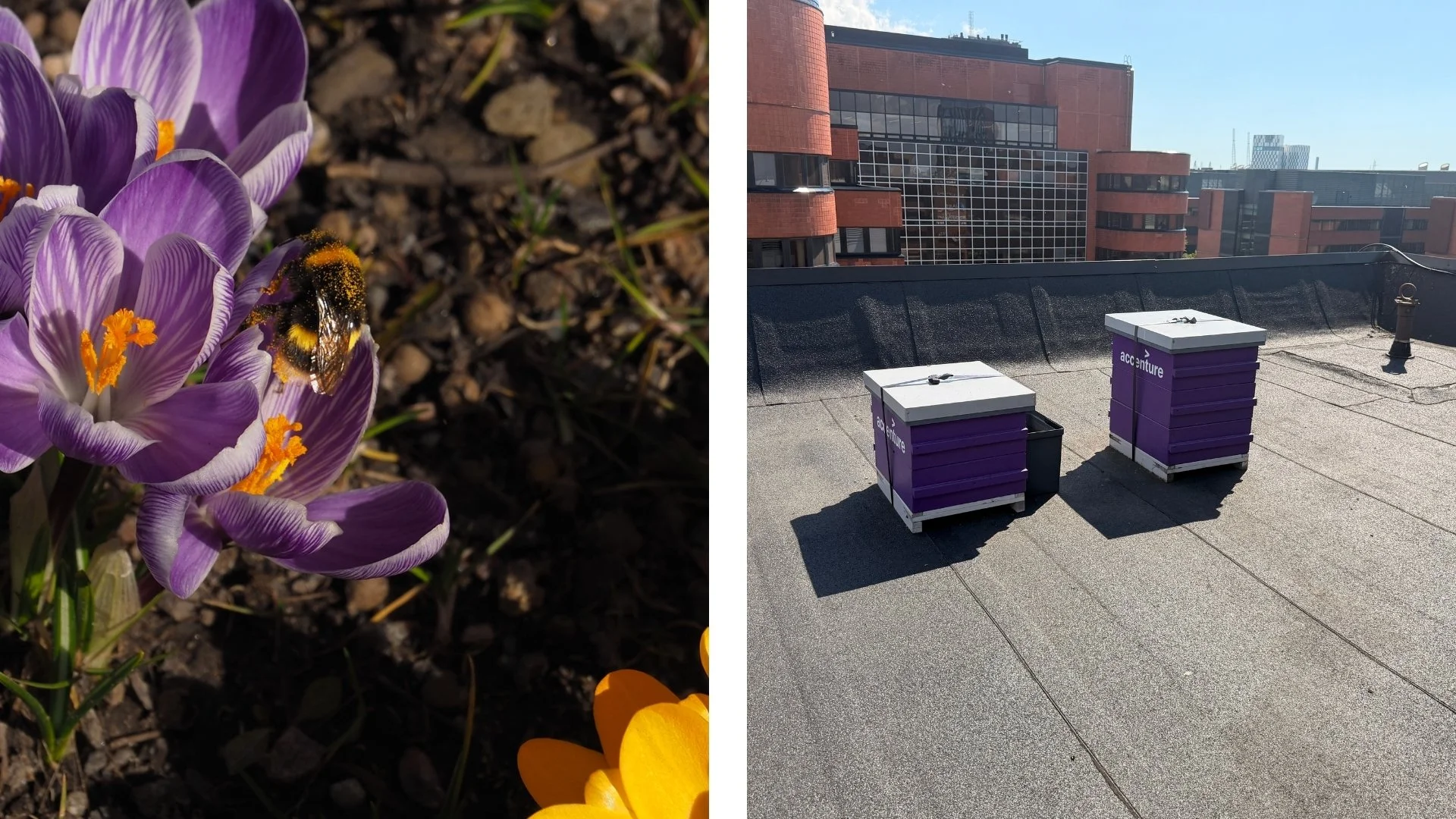
Our urban rooftop beehive colonies are home to an average of 70,000 bees in midsummer. Honeybees build highly organized colonies where every bee has an important role. The forager bee’s job is to find a good nectar source and tell the others about it. As they collect nectar from flowers, the plants’ aromas and even their DNA are stored in the honey, from which we obtain valuable research data on the city’s food supply. In our research, we have observed, for example, that bumblebees, honeybees, and mason bees prefer different plants.
Did you know that foraging bees can fly over three kilometers to collect nectar, and that a single foraging bee pollinates an average of 50,000 flowers to produce 1 gram of honey?
Accenture: 01.05.2026
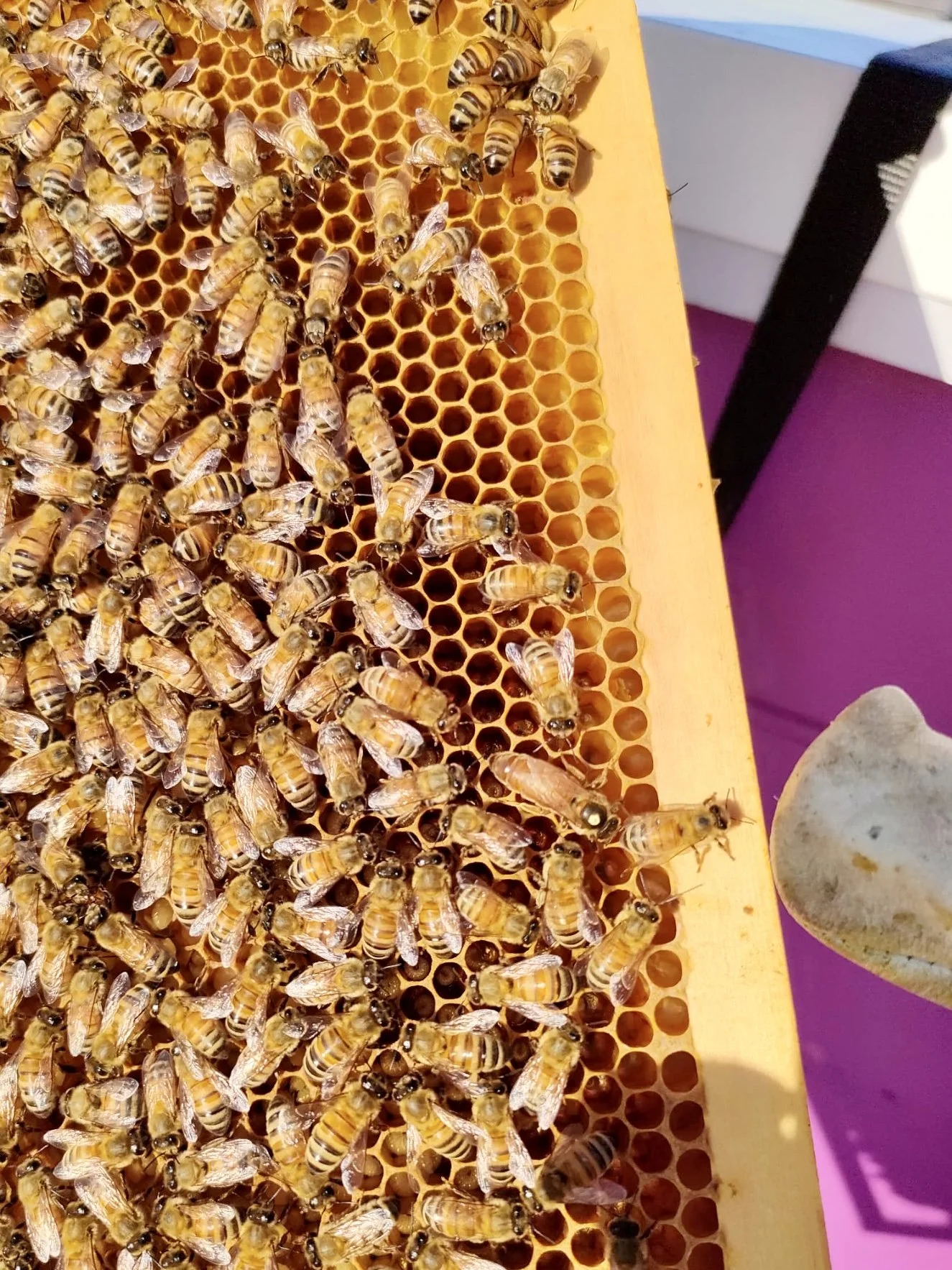
In addition to nectar, honeybees collect pollen from flowers. As it flies, the bee generates a static electric charge that causes the pollen to stick to the bee as it lands on the flower.
Bees pack the pollen into the honeycomb and use it to make protein- and vitamin-rich food, which is primarily consumed by young nurse bees, the larvae, and the queen.
Accenture: 14.4.2026
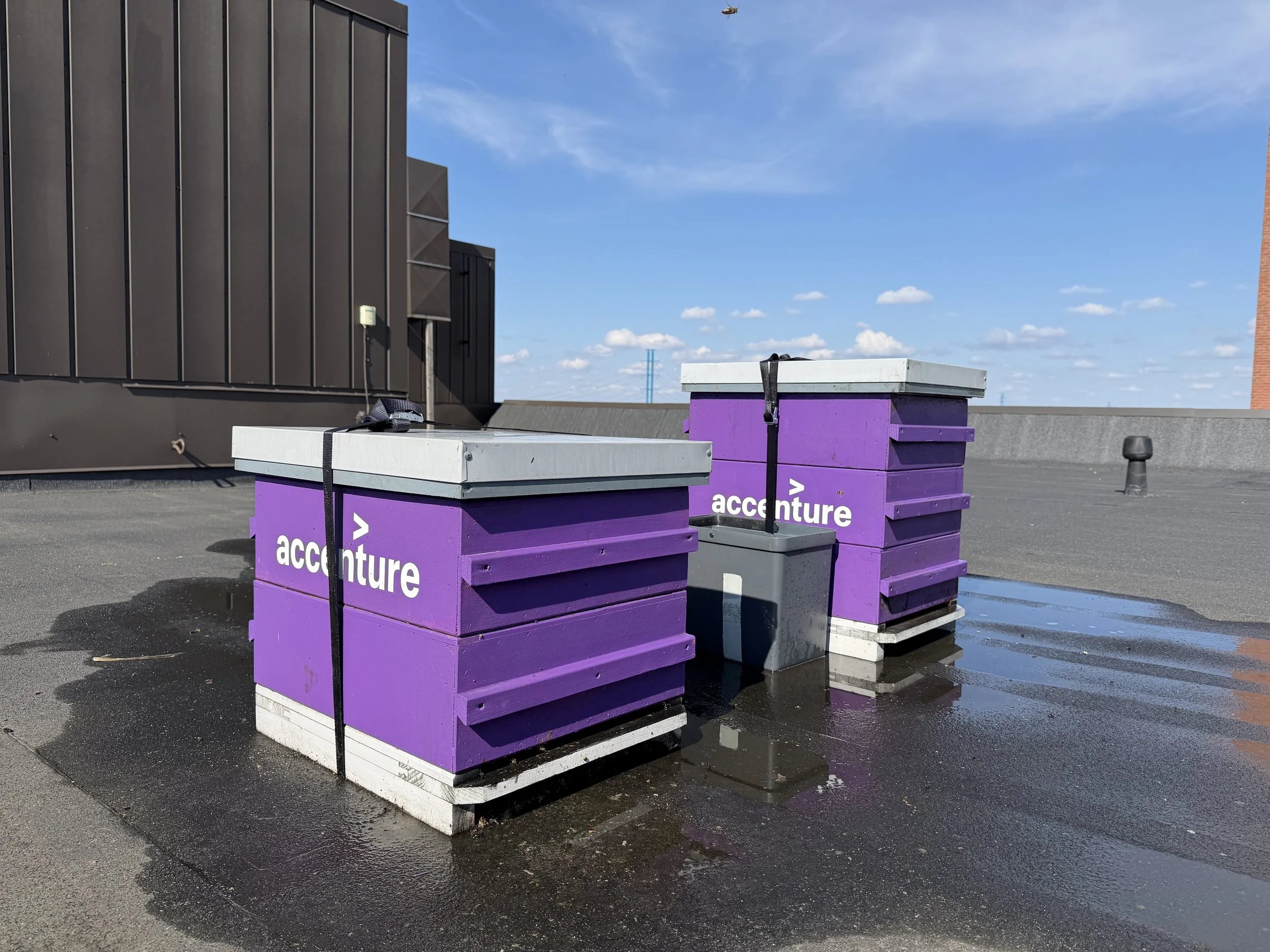
When temperatures rise above 10 degrees and the sun begins to warm the air, the bees leave the hive for first spring flights. The first flight is called a "cleansing flight" because bees are tidy creatures and do not relieve themselves inside the hive so they have been waiting all winter for this moment of relief.
During these early days of spring, the bees are scouting the first willow and alder blossoms for the much needed protein rich pollen to feed the first larva who will turn into the first cohort of newbees of the upcoming season.

Accenture: 8.10
Bees survive the long winter by forming a "winter ball" around the queen.
They do not hibernate, but produce heat energy by vibrating their wing muscles in a tight ball formation. They get the energy for this long process from the sugar that fills the hive. The picture shows how the bees have sealed the hive's roof.
Did you know that even in the harshest winter frosts, the temperature inside a beehive can exceed +25 degrees Celsius?

Accenture: 14.8.2025
During our latest visit to the hives, it was time to gather the honeycombs: the result of weeks of steady foraging across the surrounding areas. Much of the nectar came from the Linden trees, which have been in full bloom along Helsinki’s streets and parks during July.
The frames are now full, capped with wax, and ready for extraction. Soon, the honey will be spun out and jarred as a small, golden trace of the season, shaped by the bees and the landscape around Ruoholahti.

Accenture: 12.8.2025
The hives at Accenture have been busy all summer, collecting nectar from city trees and flowers. They have been building up a sweet reserve of golden honey and now it’s time to start preparing for the sweet summer turning into autumn.
During the latest visit, the two colonies were combined to form one strong hive for the winter. While both hives had collected a good amount of honey, one had a smaller population, and by merging the two, we’re giving the bees a better chance to overwinter safely, sharing warmth and resources in one cozy colony. 🐝
Accenture: 31.7.2025
This visit was the last sampling round of the summer. The honey samples we collect from the beehives contain eDNA from the plants visited by the bees on their foraging trips to the nearby nature. The samples tell us which plants the bees have visited and provide information about the biodiversity of the Ruoholahti area and the range of food sources available to the bees.
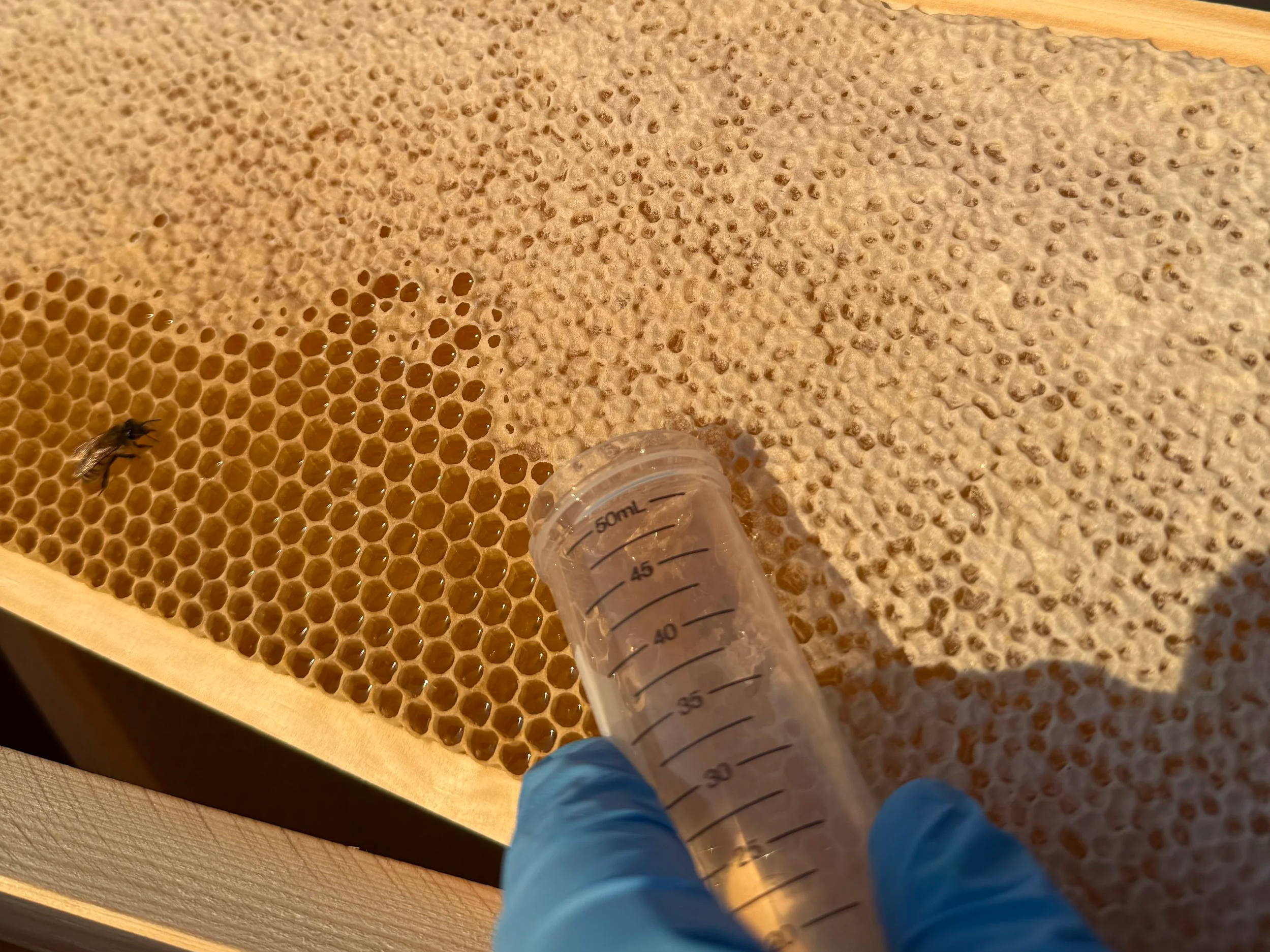
In the picture you can see wax honeycomb built by the bees. The bottom part of the comb is fresh nectar that still needs to be dried into thicker honey which the bees will seal into the combs with a wax cap as seen on the top part. By collecting the samples from the border between fresh and capped honey, we can be sure that the eDNA is from newly collected honey and represents the plants our bees have visited during the last couple of weeks.

Accenture: 22.7.2025
Summer finally started in July and the hives have been thriving in the warm weather, with forager bees making the most of sunny days to collect nectar from city trees and gardens. This time of the summer their beelines often lead to the linden trees that are in full bloom by mid July.
Lindens that line our city streets are prolific nectar producers and they give the urban honey it’s signature minty aftertaste 🌳🍯
Accenture: 24.6.2025
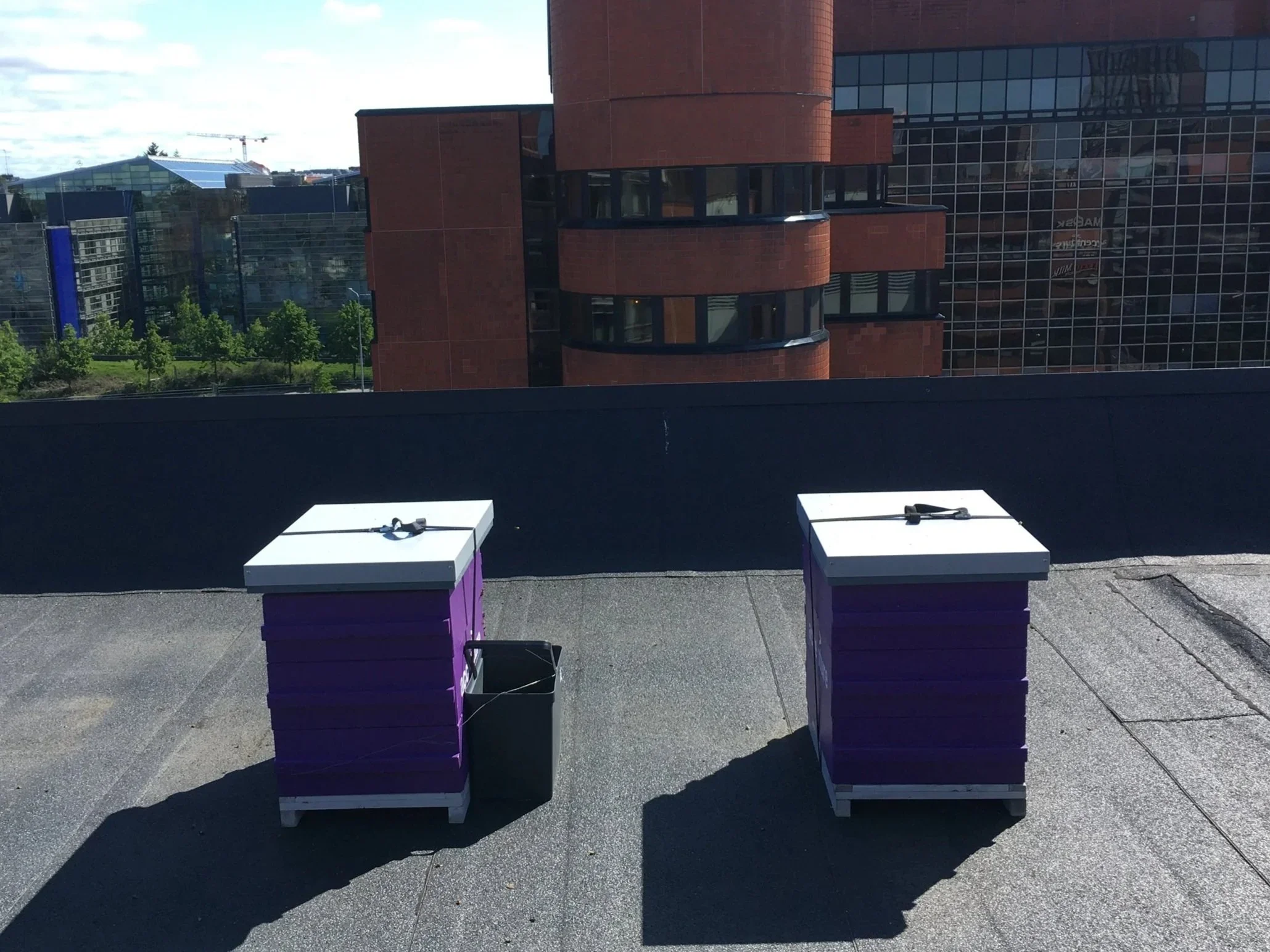
The bees have been hard at work preparing for the main nectar flow that usually starts after midsummer. The colony is active, and the frames are filling up with pollen, which is an essential food source for the developing brood.
During this visit, we also collected our first honey sample of the season. This early summer honey will be analyzed to reveal which plants the bees have been visiting in the area. It's a small but powerful way to understand local biodiversity through the bees’ eyes.
We'll be back soon with more updates from the rooftop!
Accenture: 17.6.2025
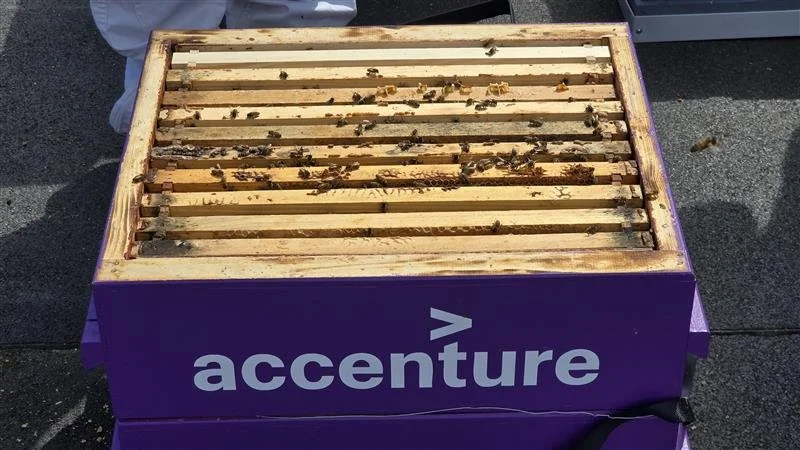
This week, we carried out a hive split: a natural beekeeping method used to prevent swarming and freeing up space to storage all the upcoming honey. In practice, this means that the queen is moved with a small entourage of worker bees into a new hive where she keeps laying eggs while the original hive will focus on honey collection during the peak season.
This approach reduces the risk of swarming and ensures that both hives can focus on what they do best: raising brood and collecting nectar through the summer bloom 🌼🍯

Accenture: 6.6.2025
The sun is out, and the hive is buzzing with activity! Our bees are making the most of the early season blooms, busily collecting nectar and pollen from the white flowers of the chestnut trees that are an abundant food source in the cities.
Stay tuned for more updates from the hive!
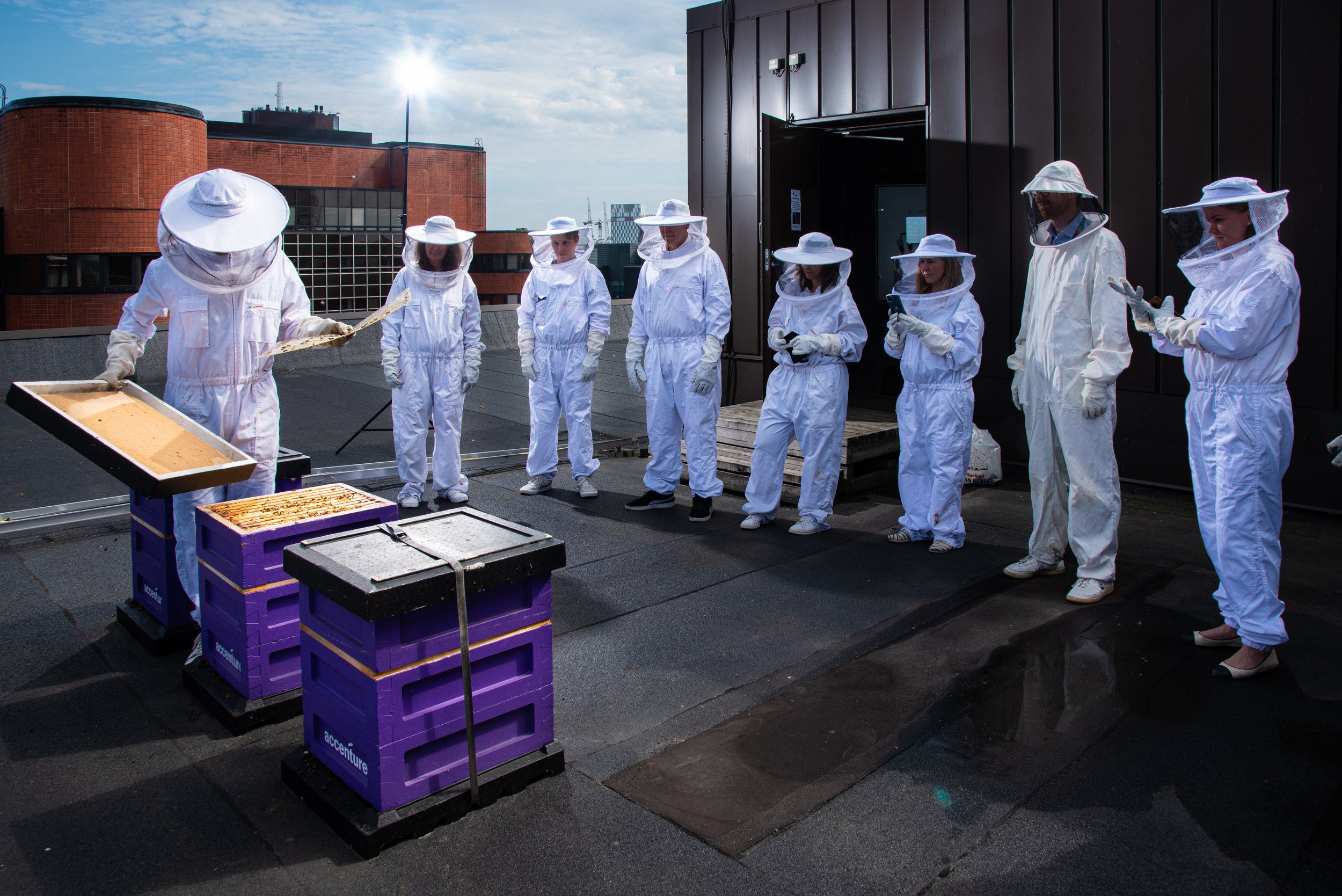
Accenture: 16.8.23
Today we welcomed a curious and engaged group of 8 participants for a hive visit under the sun!
It’s always a joy to share the bees’ world up close and share with you what’s happening inside the hive.
It was fun to answer your questions and we are sure the hive felt the buzz too! 🐝💛